
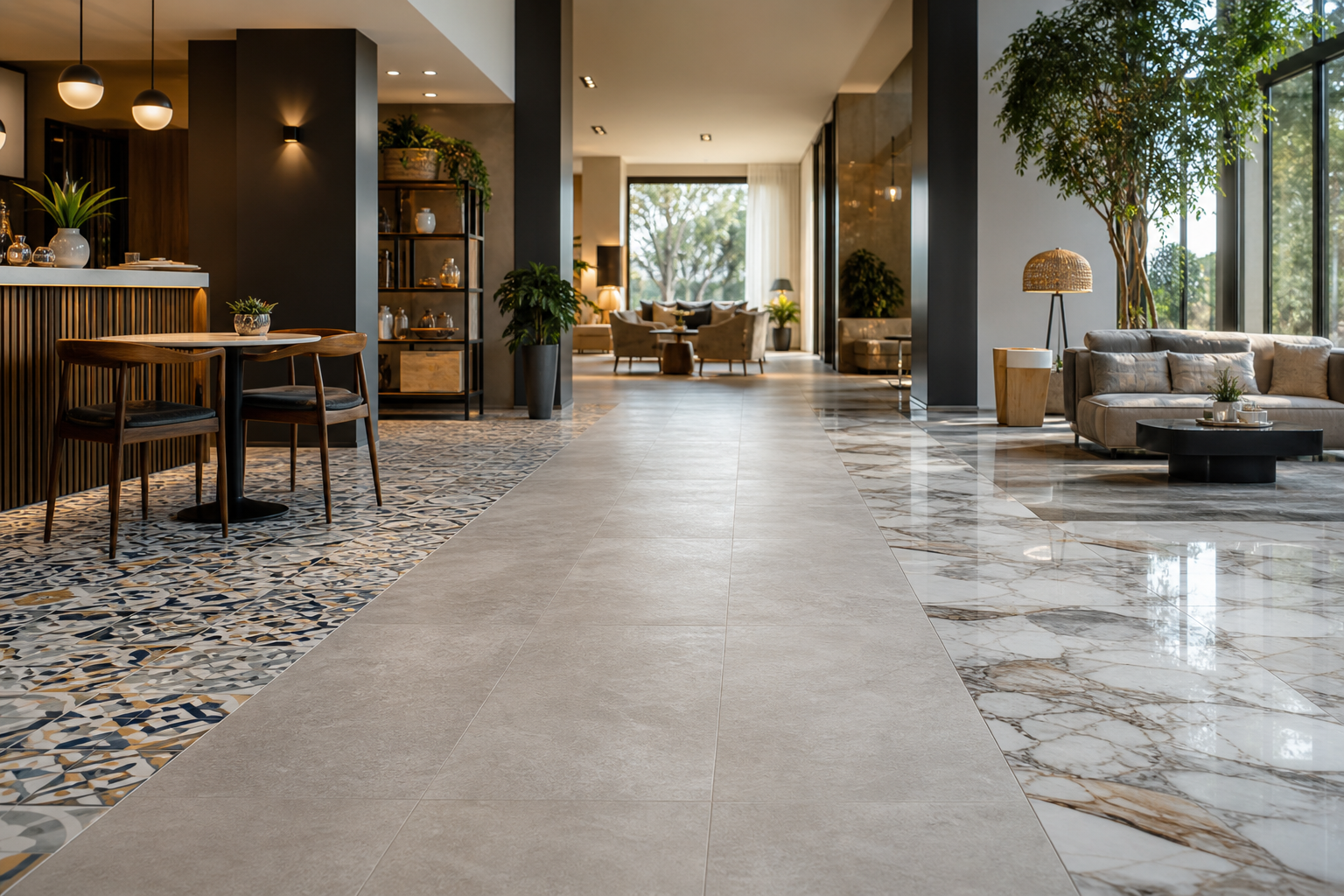
Wayfinding and pathing are critical elements in interior design, offering both functional and aesthetic benefits. They guide movement within a space, enhance safety, and create an engaging visual experience. At Decorative Materials, our curated selection of luxury flooring options elevates these design elements, providing both beauty and clarity in navigating any environment. Whether it's a bustling commercial space in Denver or a luxurious residential project in Aspen, our flooring solutions are designed to be both functional and stunning.
Flooring for wayfinding is more than just about layout; it’s about crafting a visual journey. From vibrant mosaics to distinctive natural stone patterns, every choice contributes to an ambiance that speaks of elegance and intentionality. Let’s explore how varied materials can help shape the narrative of any architectural space.
Porcelain: Versatility Meets Visual Impact
Porcelain is renowned for its versatility, with options ranging from stone-look to wood-look finishes. These diverse styles provide a canvas for creative wayfinding that effortlessly marries form and function. In areas like Denver's LoDo, a high-traffic porcelain tile might be used to demarcate pathways through a restaurant, combining durability with dynamic design.
Large-format porcelain tiles enhance the sense of space and directionality, creating smooth transitions and clear sightlines. In a museum or gallery, such tiles can subtly lead visitors from one exhibit to the next, with variations in color or texture marking different zones. This seamless blend of art and utility is what makes porcelain a sought-after choice in contemporary design.
Natural Stone: Timeless Elegance and Durability
Natural stone flooring brings an unparalleled sense of luxury and permanence to any setting. Materials like marble and quartzite are not only visually stunning but also highly durable, ideal for crafting bespoke wayfinding solutions. In a home with an open floor plan in Cherry Creek, marble tiles can guide guests from the entryway to the living areas, their veining patterns subtly directing flow.
For commercial settings like boutique hotels, the use of different types of natural stone such as travertine and limestone can create distinctive pathways that enhance the guest experience, offering both a tactile and visual journey through the space. The variety of finishes and patterns available allows for customization tailored to any aesthetic vision.
Ceramic: Artistry in Every Tile
Ceramic tiles, especially those that are hand-painted or come in decorative patterns, offer a unique opportunity for artistic expression in wayfinding design. In a café in Denver's Hilltop, ceramic tiles might adorn the floors, with vibrant colors and playful patterns guiding patrons from the entrance to the ordering counter.
The flexibility of ceramic allows for imaginative layouts that are both functional and delightful, turning every step into an exploration. Whether it's the subtle elegance of a muted tone or the bold statement of a bright hue, ceramic flooring can be molded to reflect the character of any space it adorns.
Frequently Asked Questions
What design styles work well with marble?
Marble's versatility suits a range of styles from classic to contemporary, making it ideal for spaces aiming for elegance and sophistication.
How can I incorporate multiple stone types in a single project?
Creating visual harmony with different stones involves selecting complementary colors and textures, allowing seamless transitions and unique focal points.
What's trending in luxury stone design?
Current trends highlight textured surfaces and mix-and-match patterns, allowing for personalized, sophisticated spaces that captivate the senses.
Ready to bring your vision to life? Contact a Design Consultant at Decorative Materials to explore our curated collections and receive personalized guidance for your project.