
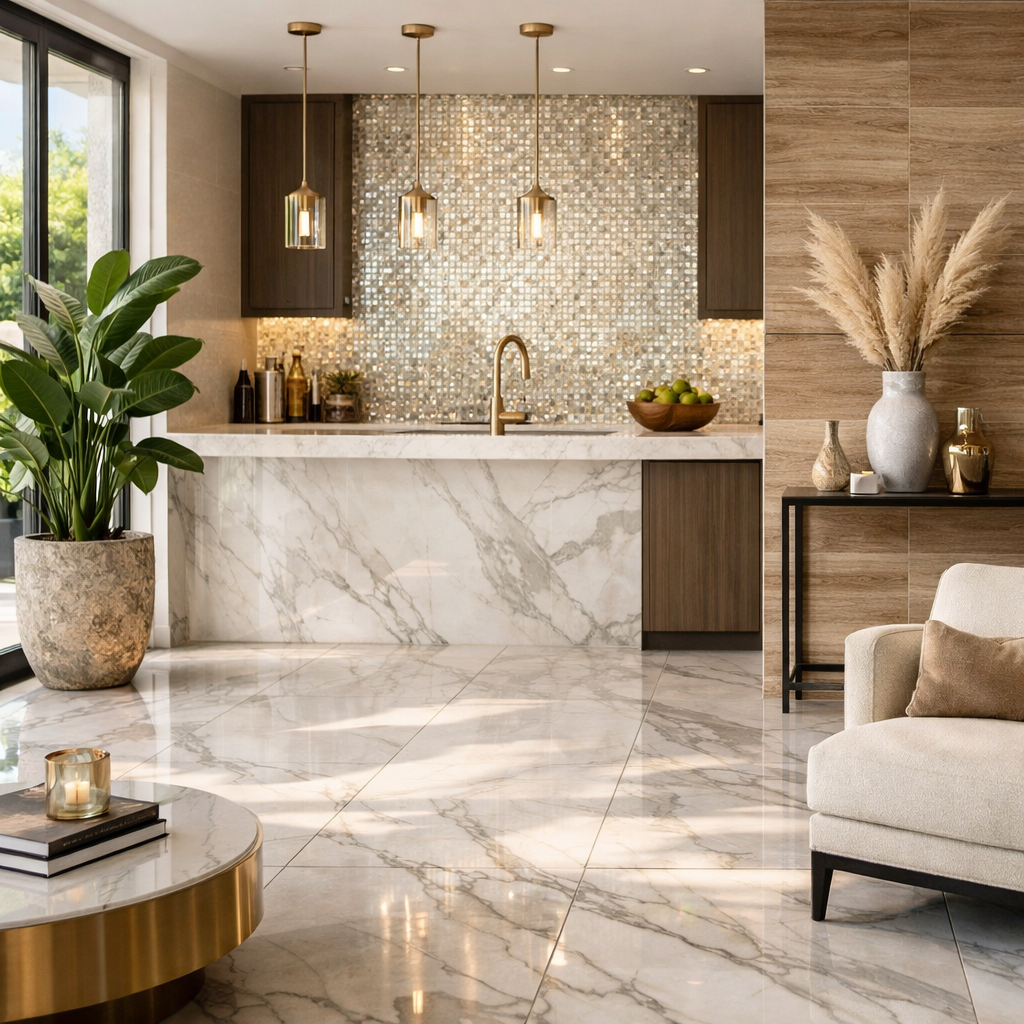
In today’s design world, sustainability not only responds to environmental demands but also enhances luxury interiors with unique design narratives. The concept of LEED certification—a crucial benchmark for green building—extends beyond architecture into the luxury of tile and stone selection. How do luxury materials marry exquisite aesthetics with sustainability? Let's delve into the nuances of sustainable design and explore how the right tile choices can significantly enhance LEED points while creating visually stunning interiors.
Marble: Timeless Elegance Meets Sustainability
Marble, a staple of luxury interiors, offers elegance and timelessness that few materials can rival. But it's not just about beauty—the high quality and local sourcing of certain marble collections contribute to a sustainable design approach. By opting for locally quarried marble, Colorado's design community can reduce transportation emissions and bolster regional economies.
Marble's enduring appeal lies in its variance and rich veining, lending every space a sense of personalized grandeur. Its availability in large slabs allows for the creation of seamless, stunning surfaces, perfect for both floors and countertops. Paired with greener design decisions, like LED lighting and energy-efficient systems, marble becomes part of a holistic sustainable strategy.
Porcelain: Versatility in Eco-Conscious Design
Versatile and durable, porcelain tiles are another key player when aiming for LEED-certified tile choices. From their manufacturing process to their recyclability, porcelain tiles can significantly contribute to earning LEED points. Advances in production have led to more sustainable practices, reducing waste and energy consumption.
Porcelain’s design versatility—ranging from wood-look to sleek stone-look tiles—provides design professionals endless possibilities to craft cohesive, sustainable spaces. Whether it’s laid in contemporary Denver penthouses or rustic retreats in the Rockies, porcelain’s aesthetic flexibility ensures it can meet diverse stylistic demands while aligning with eco-friendly goals.
Glass: Reflecting Light and Sustainability
Glass tiles are an excellent choice for sustainable interiors, thanks to their capacity to reflect light and reduce energy consumption. In addition, many glass tiles are made from recycled materials, directly contributing to LEED certification points. Their luminous quality can elevate a space’s aesthetic by enhancing natural light, creating brighter and more open environments.
The mosaic format of glass tiles adds a touch of artistry and intricacy, suitable for luxurious bathrooms or striking kitchen backsplashes. By choosing glass, designers can craft opulent interiors that align with sustainability principles, offering both striking beauty and eco-conscious appeal.
FAQ: Luxury and Sustainability in Tile Selection
What design styles work well with marble?
Marble is versatile, complementing styles from classical elegance to modern minimalism. Its unique veining and color variations make it a go-to for creating sophisticated, timeless spaces.
How can I incorporate multiple stone types?
Layering various stones like marble, quartzite, and lavastone adds depth and interest. Combine different textures and finishes for a curated, cohesive look that reflects personal style.
What's trending in luxury stone design?
Current trends emphasize natural patterns and sustainability. Designers are embracing organic looks with a focus on eco-friendly sourcing and local materials to enhance beauty sustainably.
Ready to bring your vision to life? Contact a Design Consultant at Decorative Materials to explore our curated collections and receive personalized guidance for your project.