
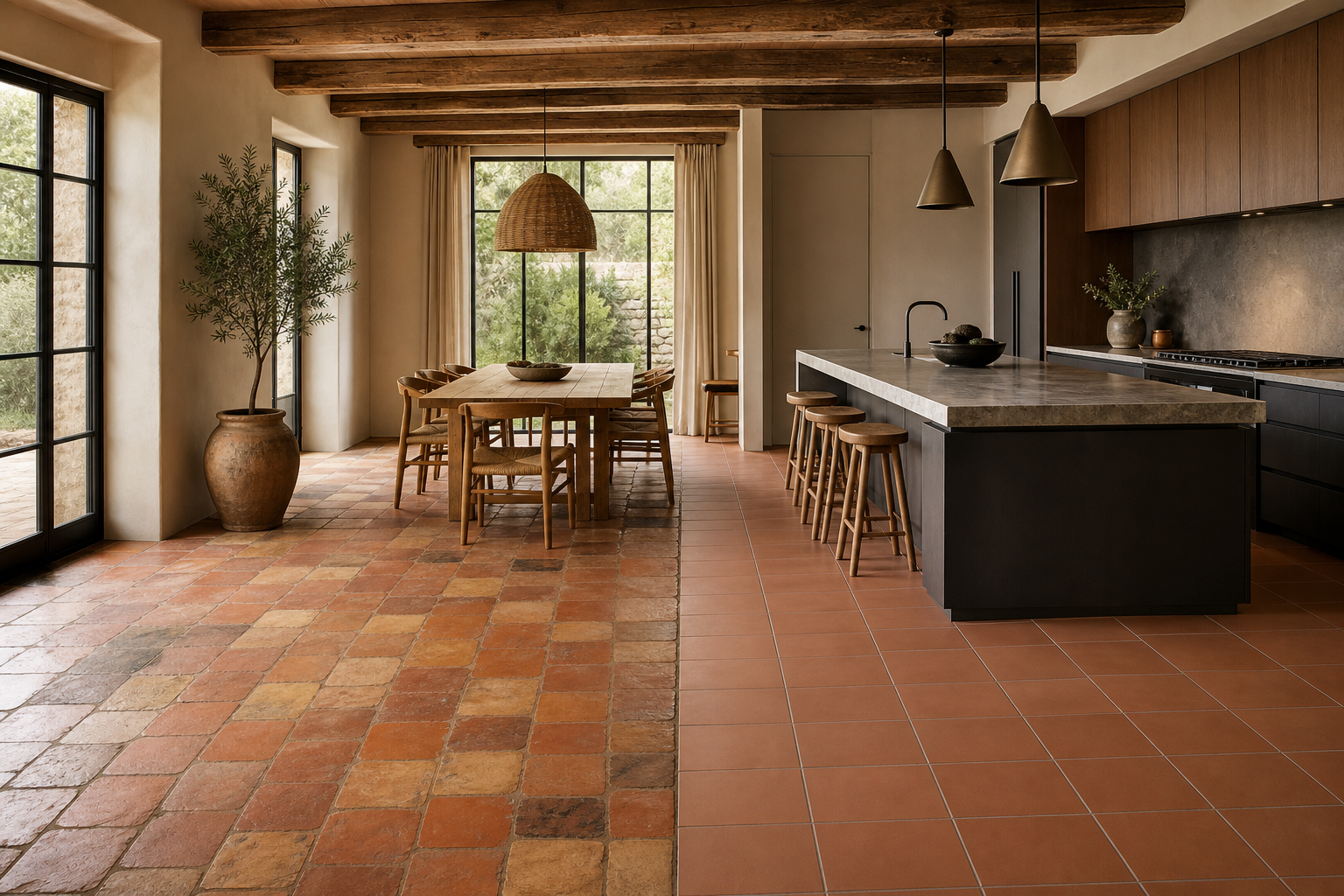
In the world of luxury design, terracotta holds a timeless appeal, capturing the essence of warmth and natural beauty. Whether enhancing a rustic kitchen or adding a touch of Mediterranean charm to an elegant hallway, terracotta tiles offer a versatile and sophisticated choice. At Decorative Materials, we appreciate the artisanal craftsmanship and unique story each tile tells, making terracotta a celebrated material among Denver’s discerning design community.
Two standout varieties within the terracotta family, Saltillo and Cotto, provide distinct avenues for aesthetic expression. They both bring exceptional warmth and character, each with their own signature style. Exploring their differences can help you decide which is the perfect fit for your next design project.
Saltillo: A Touch of Mexican Heritage
Originating from the city of Saltillo in Mexico, Saltillo tiles are renowned for their vibrant colors ranging from warm peaches and deep reds to subtle terracotta hues. These tiles embody a rustic charm, with natural variations and imperfections that contribute to their unique appeal. This handcrafted quality makes them a favorite for projects requiring an authentically warm and lived-in look.
In today’s design trends, Saltillo tiles shine in spaces that embrace eclectic or bohemian aesthetics. When paired with natural wood beams or wrought iron elements, they create an inviting, earthy ambiance that elevates the interior environment without overwhelming it. Saltillo's versatility extends indoors and can even be a focal point in sun-drenched patios, provided they're sheltered from Colorado's freeze-thaw conditions.
For design professionals in Hilltop or Cherry Creek, incorporating Saltillo tiles can support a seamless integration of indoor and outdoor spaces, amplifying the visual flow while maintaining a sense of grounded sophistication.
Cotto: The Italian Artistry
Cotto tiles, on the other hand, hail from Italy and bring a refined European elegance to the table. These tiles are typically more uniform in color compared to Saltillo, providing a smoother and more consistent finish. Their understated glamour makes them ideal for modern interiors that seek subtlety without sacrificing warmth.
Incorporating Cotto tiles into contemporary designs can create spaces that feel both clean and cozy. The tiles add a layer of warmth that contrasts beautifully with sleek, minimalistic furnishings or stainless-steel accents common in Lower Downtown Denver’s loft apartments. This harmony of textures makes Cotto a popular choice for enhancing luxury residences.
Whether in a sophisticated kitchen remodel or a chic bathroom refurbishment, Cotto tiles provide the perfect canvas for designers looking to strike a balance between tradition and trend.
Choosing Between Saltillo and Cotto
While both types of terracotta offer distinctive beauty, the choice between Saltillo and Cotto often depends on the desired atmosphere of the space. Saltillo’s character-rich, handcrafted essence lends itself to projects seeking warmth, rustic appeal, and a celebration of natural imperfections. Meanwhile, Cotto’s smooth, consistent finish suits spaces aiming for elegance and understated sophistication.
At Decorative Materials, our team of experts can help you assess these subtleties, guiding you towards the best materials for your project’s vision. From Cherry Creek’s luxury homes to modern downtown lofts, the right choice can transform any space into a work of art.
FAQs
What design styles work well with terracotta tiles?
Terracotta tiles complement a range of styles, from rustic and Mediterranean to modern and bohemian, offering warmth and timeless appeal to any space.
How can I incorporate terracotta tiles into my contemporary home?
Consider pairing terracotta with sleek materials like glass or metal to create striking contrasts, or use in neutral palettes to add warmth without overpowering the design.
Are there specific areas in the home where terracotta is most effective?
Terracotta is beautifully effective in kitchens, foyers, and sunrooms where its natural warmth can be showcased; it’s versatile in both high-traffic areas and intimate settings.
Ready to bring your vision to life? Contact a Design Consultant at Decorative Materials to explore our curated collections and receive personalized guidance for your project.