
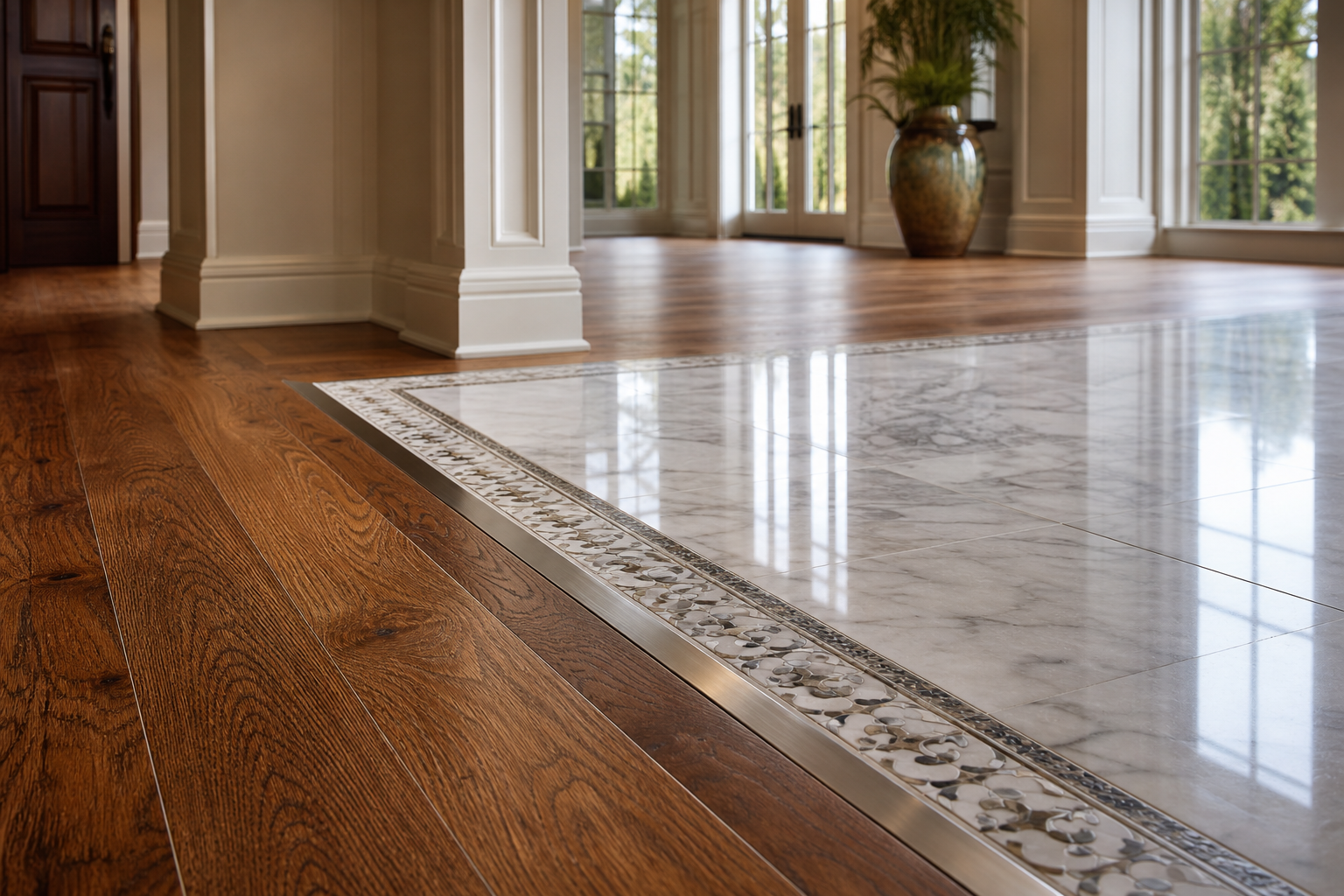
In the world of luxury design, transitions aren't merely functional—they are transformative. Seamlessly connecting diverse elements like wood and tile can create a visually stunning and cohesive environment. Whether you're working on a sophisticated hilltop home or a contemporary loft in Denver's LoDo, understanding how to bridge these materials elevates any space to new heights of elegance and function.
At Decorative Materials, we specialize in enhancing the visual flow and harmony in exclusive home designs. With artistry at the forefront, transitioning from wood to tile is not simply about material change—it's about composing a nuanced narrative where each step unveils a new chapter of style and refinement.
Crafting Seamless Wood to Tile Transitions
When incorporating wood to tile transition, the goal is to achieve a blend that feels deliberate and seamless. This requires more than just technical precision; it calls for an artistic touch that respects the character of both materials. In modern design, matching the tones and textures of wooden floors with your choice of tile can integrate warmth with sophistication.
Imagine a luxurious Denver residence where rich, grainy hardwood meets the sleek elegance of marble or the subtle dynamism of travertine. At Decorative Materials, our extensive range of tile options allows for creative exploration. Consider a stone-look porcelain tile to complement natural wood, or opt for dimensional stone tiles that provide depth and contrast.
Aesthetic Possibilities with Transition Strips
The simplest way to unify wood to tile transitions is through carefully chosen transition strips. These are not merely functional pieces but design elements that bridge the aesthetic gap. Metal transition strips can add a touch of modernity, while wood-styled strips ensure continuity and warmth.
For those embracing a more adventurous design path, consider using decorative ceramic tile as a creative transition. This not only addresses practical needs but also introduces a custom-crafted elegance that invites conversation and admiration. Each transition strip or decorative border, carefully curated from our catalog, enhances the visual journey through a home.
Design-Forward Choices for Every Space
In luxury spaces, every design choice should resonate with the overarching theme of the home. Transitioning from wood to tile offers an opportunity to redefine space—highlighting a shift in usage or ambiance. A transition can mark the threshold from a cozy living area to a grand room or extend indoor aesthetics into outdoor spaces with freeze-thaw rated options essential for Colorado's climate.
Selecting the right tile—be it a Salvatori piece from our exclusive Italian collection or a bespoke travertine mosaic—ensures that every aspect of your design complements the existing architecture, making spaces feel curated, intentional, and complete.
FAQs
What design styles work well with marble?
Marble is versatile, working beautifully in both classic and contemporary settings due to its timeless appeal and luxurious texture.
How can I incorporate multiple stone types?
Mixing different stone types can add richness and depth to a design. Consider using them in accent pieces or transition areas to create visual interest while maintaining a cohesive look.
What's trending in luxury stone design?
Current trends lean towards large-format tiles and textural contrasts between high-polish and matte finishes, offering a dynamic interplay within spaces that speaks to modern luxury aesthetics.
Ready to bring your vision to life? Contact a Design Consultant at Decorative Materials to explore our curated collections and receive personalized guidance for your project.